White-Label Saas Solutions
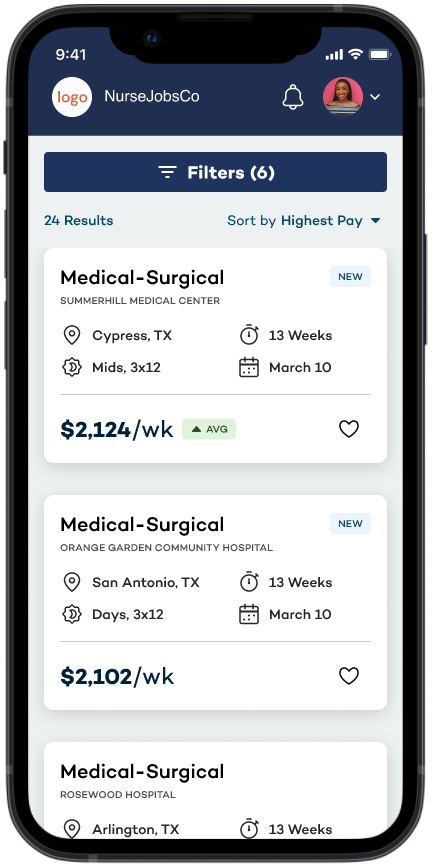
Nomad Health had a great platform and app that allowed travel nurses to easily search for and apply to jobs. Other traditional agencies typically relied on recruiters to guide nurses through the search and application process. Could we create a SaaS solution for those larger, traditional agencies?
Background
Nomad Health differs from traditional nurse staffing agencies in that they don’t use recruiters. Travel nurses looking for jobs can peruse our platform on their own time and apply to jobs that meet their interests. We’ve long gotten feedback from our nurses that our platform is easy to navigate, transparent, and well-tailored to the specifics of the travel nursing industry.
Our leadership wanted to see if offering our platform to host jobs for other agencies on a white-labeled site would be a viable SaaS solution. This would be a completely new potential line of business for the company, since Nomad had heretofore only been a staffing agency. If this worked, it would be a good cushion to protect the business from future volatile staffing trends.
The Process
Understanding the Problem and Gathering Insights
We had one potential client in mind, who had approached Nomad and expressed interest in this solution. There were a lot of things we didn’t know:
This potential partner relied on the more traditional model of having recruiters process applications. How might we design a solution that fit their workflow? What information do we need to gather from the applicant? At what point do we need to pass it along to their recruiters?
Nomad only staffed to travel nursing jobs, but this partner agency also dealt with permanent roles and per diem roles. How might we account for those different types of jobs?
With these questions in mind, we set up a couple of sessions with some of the agency’s recruiters so we could shadow them and see their workflow from start to finish. It was fascinating to see the software and process they used, and by asking exploratory questions throughout, we were able to gather a preliminary list of requirements for a proposal.
Ideating
Since this was still an experiment and not a project we were fully committed to, we wanted to make this as lightweight as possible, especially from an engineering perspective. We explored a couple main options: having the agency’s jobs on a separate part of our platform (similar to Amazon digital storefronts or Etsy shops), or creating a whole new white-label site altogether with a unique URL.
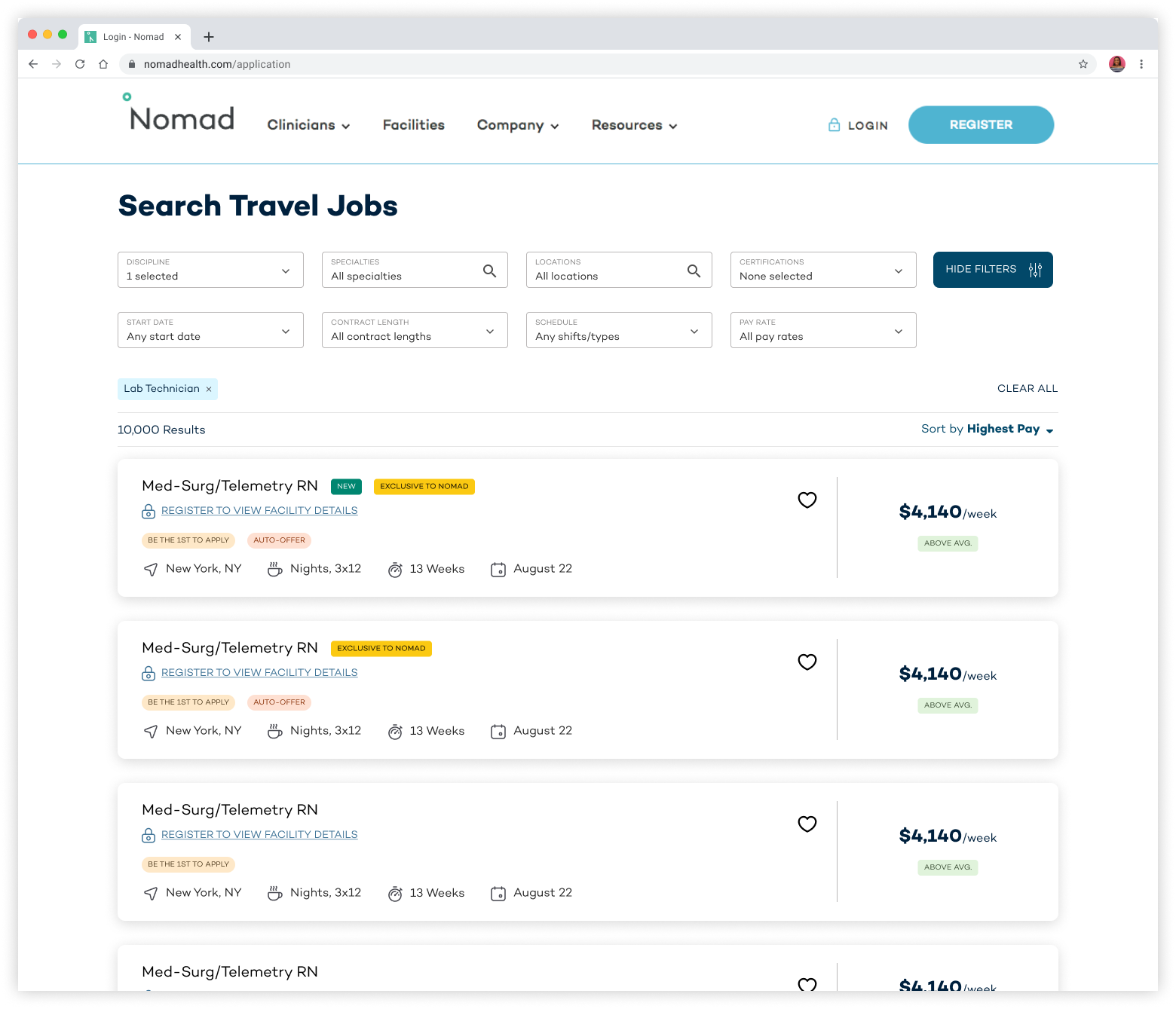
Nomad health search page
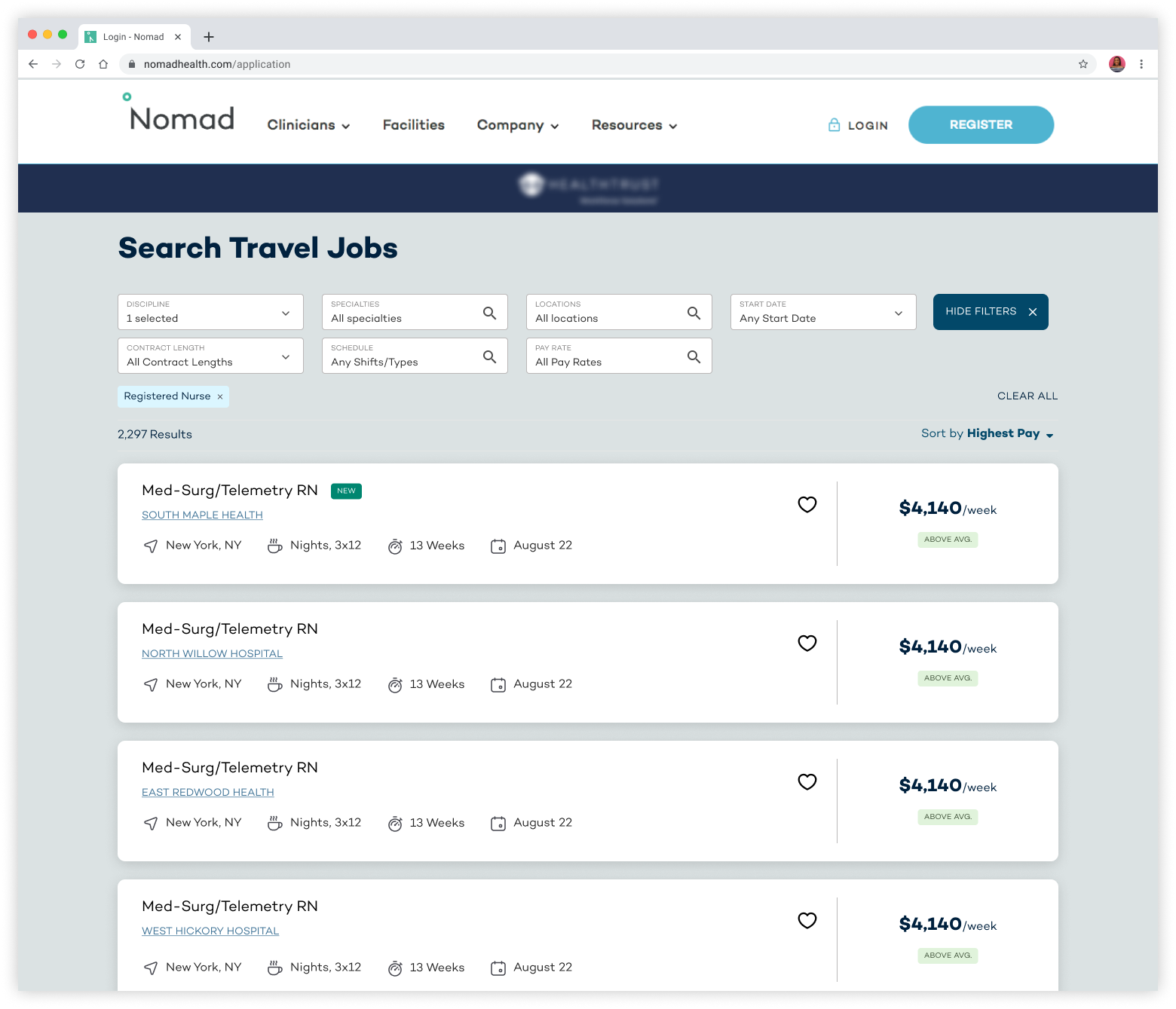
Sample search page with a partner agency's jobs
The MVP
Ultimately, after conferring with Engineering, we decided on a separately hosted site for the agency partnership because we didn’t want to confuse nurses who had been employees with us before, and we didn’t want the agency’s jobs potentially eating into our placements if they were all hosted at the same place. It would also reduce tech complexities to have each instance hosted separately, and be more repeatable if this was a successful venture.
The next step was to determine how to get the most impact for a white-label site with the fewest amount of changes. Because the most immediately visible brand elements on the site were our brand colors and fonts, I went on the agency’s site to determine what should replace our primary colors, secondary colors, header font, and paragraph font. I also tried this approach with other potential agency partners to see if it would be sufficient for any other partners, not just this one.
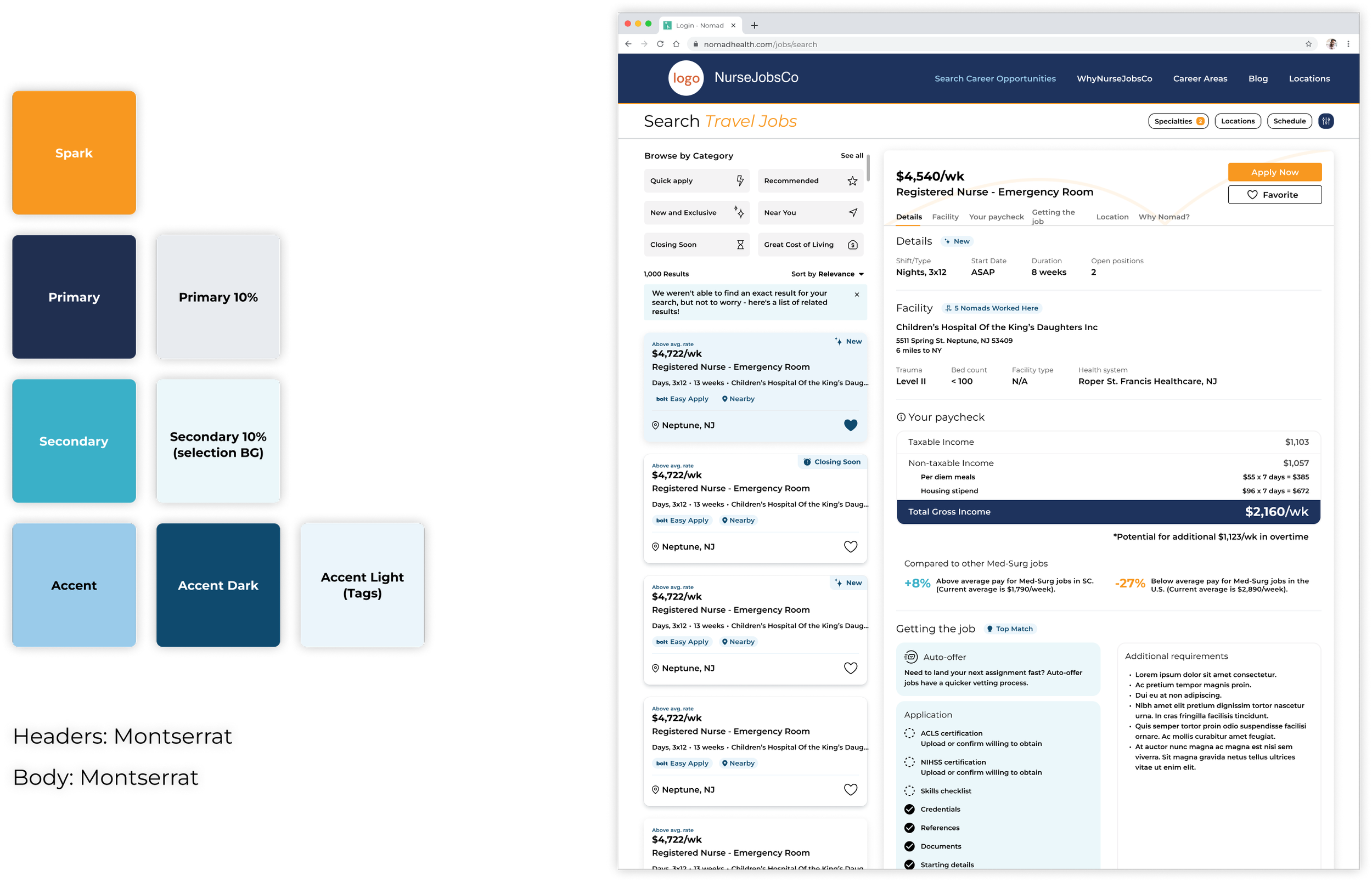
Potential partner's branding applied to a job details page
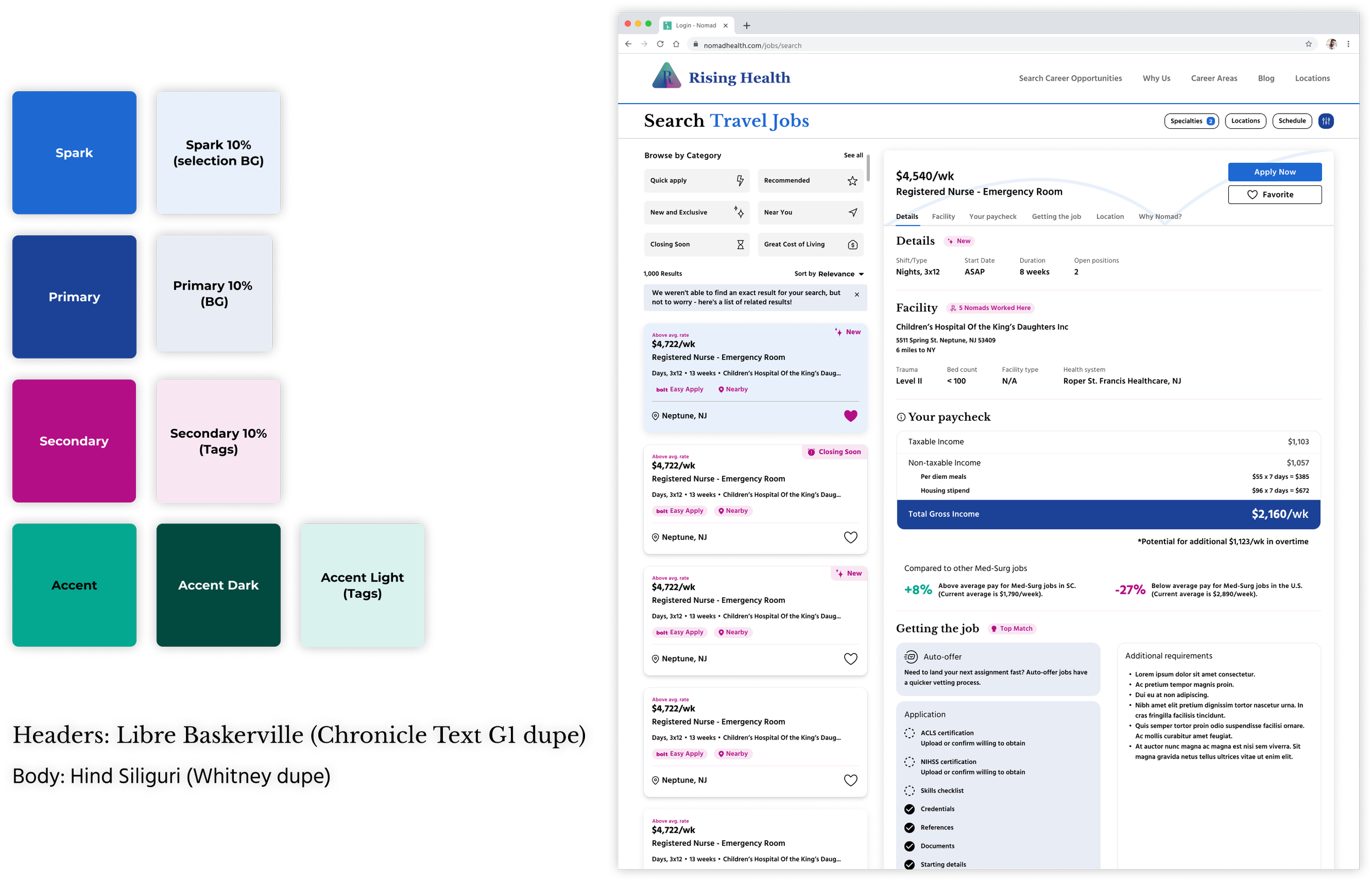
Potential partner's branding applied to a job details page
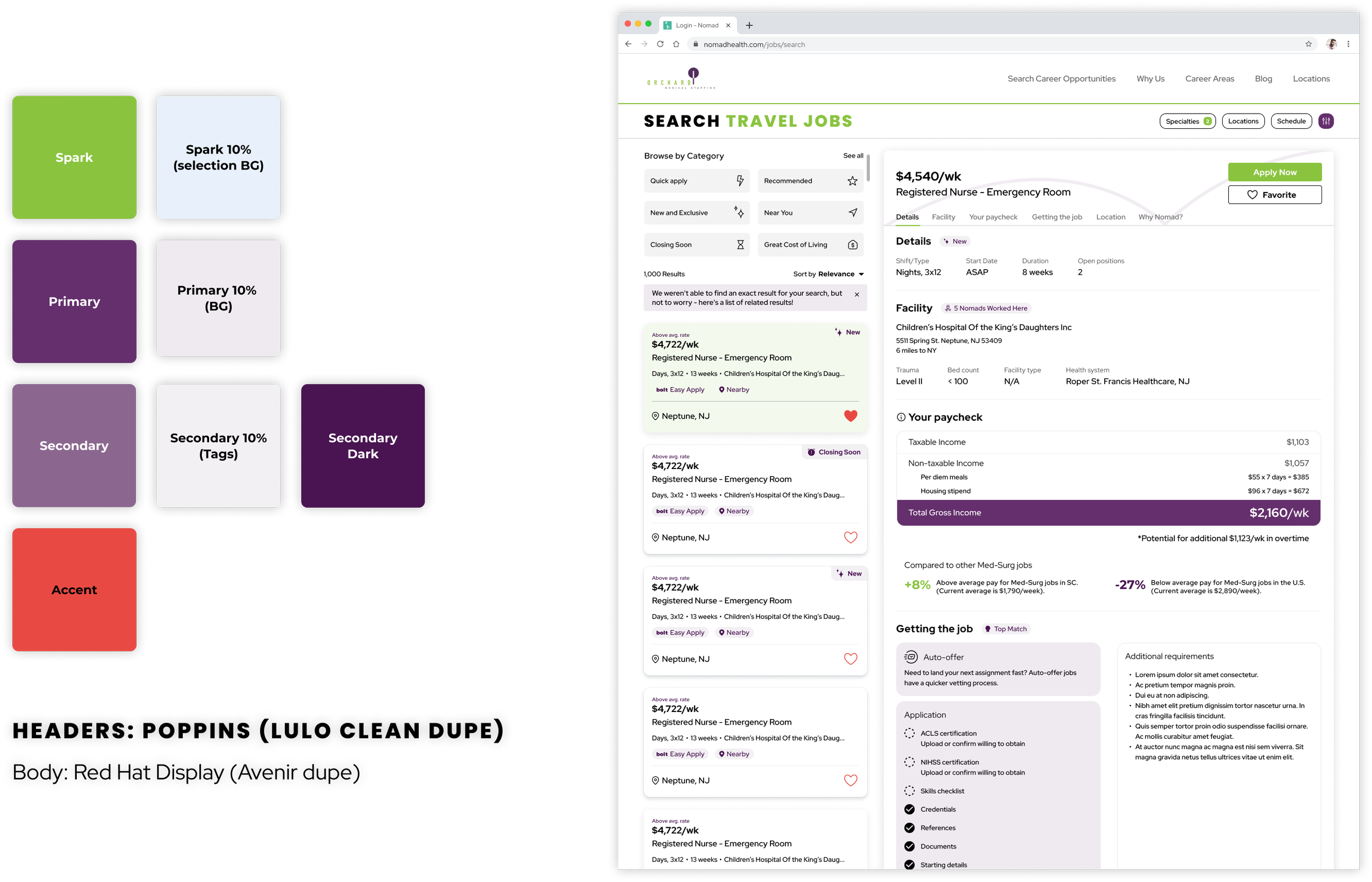
Potential partner's branding applied to a job details page
Validating and Iterating
We showed a prototype of the happy path application workflow to the agency’s VP of Marketing to get preliminary feedback. The major things we needed to validate:
Did we incorporate enough of the agency’s brand despite keeping our core functionality the same?
Through the shadowing session, we learned they had less stringent requirements than our typical Nomad workflow. Were we collecting enough information and the right information for the agency’s recruiters?
Based on this session, I added a few key elements to the final prototype:
We added a free-text field for applicants to explain any disciplinary actions against their license.
We showed how a user could add a reason for a gap in their work history, since that was something the agency had had trouble collecting in the past.
We also showed a sample error validation workflow, to show that we would be able to deliver legitimate information from genuine applicants. They had mentioned that it was difficult for their recruiters to sift through applications submitted by people who had no qualifications or licenses, so being able to submit more serious applicants was a major value add.
“That demo video was VERY nice, bravo! This visual element will help our pitch a lot.”
The final video prototype presented at the pitch meeting
Results & Takeaways
At the pitch meeting, the agency’s executives were convinced of the value of our partnership, largely thanks to the clarity offered by the video prototype. A $505k contract was drafted and sent to our legal team to kick off the paperwork.
This was an unusual project because of how different it was from a typical roadmap feature. Instead of a weeks-long process of discovery, definition, development, and delivery, it was all compressed into the span of a few days, based on pitch meeting scheduling and shifting requirements. The ideation required out-of-the-box thinking, as this SaaS solution was a departure from our staffing agency business model. With a lean team of just one PM, one engineer for consulting, and myself as the lead designer, we were able to meaningfully explore a new business solution and secure a preliminary contract.